Showing posts with label Italian. Show all posts

Sunday, March 15, 2009

Italian Makers of Prosecco Seek Recognition


Hello my dear friends the world over!

Recently I came across an excellent article in the New York Times, the favorite newspaper of angered-yet-cultured elitists across our wonderful globe. It is a very good read about Prosecco, which is a sparkling wine from Italia. You might say that Prosecco is Italy's version of champagne (though Italian Prosecco makers really wish you wouldn't). I've had opportunities to enjoy Prosecco, and I must tell you that I really am in like with it. It's quite easy to consume a bottle of it quickly, as it is quite delicious and very refreshing on a warm day. This article talks about Prosecco's beginnings and its current popularity.

A while back I had a semi-expensive Moet champagne, and it was stellar. However, I must still give the edge to Prosecco, not because it is actually better, but because I've had a hard time with the French at "various points" in my life. I believe this began with all the scowling from French hoteliers during my childhood travels to the Gallic country, a country that the Nat Geo Channel irreverently called, "The Land of the Frogs".

Now, while Nat Geo's shocking term is of course belittling (or even racist, some small-minded people might say) and may actually have been about a mountainous area of the Peruvian rainforest and not about France at all, I do not condone it in the slightest. That said, I can repeat it guilt-free because I have some French blood floating around in me. Additionally, for the purposes of proving that I am not a racist, I am announcing that I am now intensely proud of my French heritage. See? I went from anti-French to pro-French in the blink of an eye. It's that slippery politician-style turnabout, the little technicality, the little loophole which now makes this heretofore unfortunate situation a "win-win". Meaning, that both you and I supposedly win (though I'm not really sure how you win in all of this).

By the way, I always wondered why people swallow that term, "win-win", so easily, like famished picnic seagulls swallowing leftover hot dogs whole. Don't they know that the pronouncement of "winning" is completely subjective, and almost certainly intentionally skewed by the malefactors who use said evil term? Whatever, who cares.

So please take a few minutes to read this article; you will like it. Oh, and if you are not one of the aforementioned angered-yet-cultured elitists, I'm sure you will forgive Blogiorno for soiling your precious retinas and corneas with an article from the New York Times, whom I now cheerily thank for such an excellent article, and wish them Godspeed in their impending bankruptcy proceedings!

Finally, to my wonderful French readers, I actually do love you all, and I do so wish that you would find it within your proud hearts to love back an admiring world. Really, we aren't so bad.

To read "Italian Makers of Prosecco Seek Recognition", click here.

Note: The above link requires a free subscription, which I think is worth it since you'll be able to view all of the photographs and visuals in large scale, and in some small way it might actually help them stave off death a while longer. If you'd rather not subscribe, I am including the entire article below, albeit with small photographs. You can click the text to make it easier to read.

Okay then! Thank you once again for reading Blogiorno!

Ciao, a presto amici miei!

___________________________________________


Monday, October 27, 2008

Vantaggio: La Polizia!*

In Italy there is a new "police car" that is stalking errant drivers on the highways. While Italian law enforcement have been using Italian-made Lamborghinis for some time now, they have recently "upgraded" to a newer model, the Lamborghini Gallardo. The Gallardo has 560 horsepower and a top speed of 203 mph, making it the world's fastest police car. Oh, and it costs about $225,000. Hey, hey, hey, they need it, okay? Those speeders are dangerous criminals, alright?

Anyway, for those of you who aren't familiar with Lamborghini, it is one of the most revered Italian sports car manufacturers in the world, founded in 1963 by tractor company owner Ferruccio Lamborghini. Years ago Ferruccio was unhappy about the quality of the Ferrari sports car he purchased, so he dropped by the Ferrari factory to tell Enzo Ferrari in person. A perturbed Mr. Ferrari told Ferruccio that if he wanted a better car he should build it himself, thus Lamborghini was born. Now, the autostrada in Italy are patrolled not by Ferraris, but by Lamborghinis! Blogiorno believes that this is an excellent use of public funds, and anyway can you really ask Italian policemen to chase speeding bad guys in a regular Fiat? Mai, of course not!

Ciao amici!

* Advantage: Police!

Sunday, October 26, 2008

The "New Poor" in Italy

The global economic downturn continues on in its devastating path, my friends. Here is an article about how it is impacting Italy. As always, it is those who can least battle such forces who are affected the most. Failing corporations simply pass along their higher costs to the consumer, then provide sumptuous lifestyles for their executives with that newfound revenue, all in hopes that their leaders will be more "motivated" to rescue the company. At least, that is how it is in America. I've heard it said that, "as America goes, so goes the rest of the world". Economics aside, and speaking in the moral sense, this is too bad, as it seems as though America works hard at exporting paradigms for every social ill and moral degradation to the rest of the world. Examples are intense consumerism, family breakdown and reality T.V. shows featuring angry frat boys with frosted hair and unintelligible ditzy California-esque girls who use the word "like" as a noun, pronoun, adverb, adjective, preposition, conjunction, etc. God have mercy on us. Or not.

Enjoy!

(You may click on the article to enlarge the text.)

Saturday, October 25, 2008

Anti-Anorexia Ads in Italy

*** Disclaimer: This entry may be difficult to read and may be offensive to some. It is presented here because it addresses a facet of the devastating problem of eating disorders, something to which I have seen many friends fall prey. This story and the young woman at the center of it struck a chord in me and doubtless will for you as well. ***

In Fall of 2007, an Italian government "watchdog" organization banned controversial billboard ads which had caused much uproar in Milan. The ads featured an unclothed anorexic model in various poses, along with the words, "No Anorexia". You may conclude that the ads were part of a campaign against the deadly disease, but their purpose was not purely altruistic. The ads also doubled as a plug for a new Italian fashion brand, Nolita. Nolita claimed that they commissioned the ads so that they would feature a message to the fashion world, while at the same time advertising their brand. The Italian government differed with Nolita, stating that the ads were offensive.

The woman at the center of the ads is not acting or role-playing in any way, and the photos were not altered. She is a 28 year old french model named Isabelle Caro, and has been suffering from anorexia and bulimia since age 14. She agreed to do the ad in the hopes that she could help people realize the true effects of the disease from which she suffers. Sadly, those effects of her eating disorder were vividly and painfully on display in the ads.

The questions about the Nolita ad campaign still remain debated. Is it proper for billboards (or proper at all)? Is it offensive? Is it pornographic? Is it demeaning to the model or other victims of eating disorders? Is it solely a shrewd and cruel ploy to garner attention for the fashion startup company? Or, is it empowering to those who suffer from eating disorders? Is it a positive step towards shining more light on this affliction? Is it a positive/stern message to an industry which perhaps perpetuates eating disorders via the imagery it purveys? The ethical and moral questions related to this story seem endless.

We here at Blogiorno have never shied away from "controversy" or tough questions, and this is certainly one of those. As always, we invite you to leave your comments. Before commenting, you may wish to watch short news video vignettes about Isabelle to gain the full perspective.

If you would view the news videos of Isabelle Caro, click here.

If you would like to read a BBC article about the banned ads, click here.

Thursday, February 21, 2008

Italy Investing in Wind Energy


Italy To Build 500 Wind Plants

(ANSA) - Milan, November 6, 2007 - Italy plans to build 500 more wind plants, according to the Monday economic supplement of Italy's daily Corriere della Sera. With the help of the 500 additional plants Italy plans to reach a 23 gigawatt energy production - ten times higher than what the country is currently producing. The new wind farms will make Italy the world's biggest producer of wind energy, leapfrogging Germany which is now producing 22.6 gigawatts.

In 2006 alone, 417 wind plants were built in Italy, situated mainly in the southern regions of Sicily, Puglia, Basilicata and Molise but also in the central region of Tuscany. Wind energy is the most lucrative type of green energy and is attracting Italian investors such as diversified holding companies Moratti and De Benedetti and big oil companies such as Garrone, according to Corriere della Sera. Italian energy group Enel SpA is also searching for sites with steady wind out of Italy, in Europe.

Meanwhile, Spain's Endesa and Iberdrola are also building plants in Basilicata and Calabria. The biggest investor in wind plants in Italy is the UK-based company International Power.

www.ansa.it

____________________________________________


Wind Energy Facts (from renewableenergyweek.com), with Blogiorno Editorial Notes:

* In 2006, the U.S.'s cumulative wind power capacity was 9,971 MW -- within close striking distance of the 10 gigawatt (10,000 MW) milestone.

[Note, this is capacity; it doesn't mean we actually, like, do it. Or even want to. Compare to Italy's planned capacity of 23 gigawatts, as cited in the story above.]

* 2,500 MW of capacity is enough to power more than 600,000 average American homes.

[For 5 minutes. At 2:00 a.m.]

* Texas edged ahead of California in Wind Energy capacity in 2006.

[They'll need all that power to keep the planned high-voltage electric fences along the border going. For its part, California will install Red Bull vending machines along the border. Requiring purchase of the high-energy Red Bull drinks, rather than freely distributing them, will deter illegals, California officials say.]

* California has led the nation in wind capacity for 25 years, and at one time was host to more than 80 percent of the wind capacity in the entire world. However, energy and electricity prices tanked during the global oil glut of the 1980s, putting California's wind power boom on hold.

[California has made up for this lapse by "proudly" leading the world in the export of attractive-but-talentless, surgically-enhanced, blonde Hollywood "starlets", and their non-famous look-a-like counterparts. Friends, Blogiorno opposes such exports and believes that we must investigate energy-efficient disposal methods for these undesirable, unnatural resources. Our future depends on it.]


Thursday, January 03, 2008

Italy: The Saddest Country?

Happy New Year, cara amici miei! Happy, that is, unless you live in Italy, in which case it will be a very unhappy new year, at least according to some people. I recently read a story in the New York Times about the national mood in Italy these days, which, according to the article, is not so rosy. My friends, I once promised that I would give you all views of Italy, unlike Hollywood’s cheeseball-romantic portrayals of that country in their crummy PG-13 movies. Therefore, I present to you this article, for your thoughtful consideration. As always, I cherish your thoughts and feedback.

(Note: This article originally appeared on the New York Times website; if you would like to read it there, click here.)

________________________________________________


In a Funk, Italy Sings an Aria of Disappointment

By IAN FISHER
Published: December 13, 2007

ROME — All the world loves Italy because it is old but still glamorous. Because it eats and drinks well but is rarely fat or drunk. Because it is the place in a hyper-regulated Europe where people still debate with perfect intelligence what, really, the red in a stoplight might mean.

But these days, for all the outside adoration and all of its innate strengths, Italy seems not to love itself. The word here is “malessere,” or “malaise”; it implies a collective funk — economic, political and social — summed up in a recent poll: Italians, despite their claim to have mastered the art of living, say they are the least happy people in Western Europe.

“It’s a country that has lost a little of its will for the future,” said Walter Veltroni, the mayor of Rome and a possible future center-left prime minister. “There is more fear than hope.”

The problems are, for the most part, not new — and that is the problem. They have simply caught up to Italy over many years, and no one seems clear on how change can come — or if it is possible anymore at all.

Italy has charted its own way of belonging to Europe, struggling as few other countries do with fractured politics, uneven growth, organized crime and a tenuous sense of nationhood. But frustration is rising that these old weaknesses are still no better, and in some cases they are worse, as the world outside outpaces the country. In 1987, Italy celebrated its economic parity with Britain. Now Spain, which joined the European Union only a year earlier, may soon overtake it, and Italy has fallen behind Britain.

Italy’s low-tech way of life may enthrall tourists, but Internet use and commerce here are among the lowest in Europe, as are wages, foreign investment and growth. Pensions, public debt and the cost of government are among the highest. The latest numbers show a nation older and poorer — to the point that Italy’s top bishop has proposed a major expansion of food packages for the poor.

Worse, worry is growing that Italy’s strengths are degrading into weaknesses. Small and medium-size businesses, long the nation’s family-run backbone, are struggling in a globalized economy, particularly with low-wage competition from China.

Doubt clouds the family itself: 70 percent of Italians between 20 and 30 still live at home, condemning the young to an extended and underproductive adolescence. Many of the brightest, like the poorest a century ago, leave Italy. The stakes have risen so high that Ronald P. Spogli, the American ambassador and someone with 40 years of experience with Italy, warns that it risks a diminished international role and relationship with Washington. America’s best friends, he notes, are its business partners — and Italy, comparatively, is not high among them. Bureaucracy and unclear rules kept United States investment in Italy in 2004 to $16.9 billion. The figure for Spain was $49.3 billion.

“They need to sever the ivy that has grown up around this fantastic 2,500-year-old tree that is threatening to kill the tree,” Mr. Spogli said.

But interviews with possible prime ministers, businesspeople, academics, economists and other Italians suggest that the largest reason for this malaise seems to be the feeling that there is little hope that the ivy can be cut, and that is making Italians both sad and angry.

An Angry Message

“Basta! Basta! Basta!” Beppe Grillo, a 59-year-old comic and blogger with swooping gray hair, howled in an interview. The word means “enough,” and he repeated it to make his point to Italy’s political class clear. In recent months, Mr. Grillo has become the defining personification of Italy’s foul mood. On Sept. 8, he gave that mood a loud voice when he called for a day of rage, to scream across Piazza Maggiore in Bologna an obscenity politely translated as “Take a hike!” A few thousand people were expected. But 50,000 jammed into the piazza, and 250,000 signed a petition for changes like term limits and the direct election of lawmakers. (Voters now cast their ballots for parties, which then choose who serves in Parliament, without the voters’ consent.)

His message was enough inaction and excess (Italian lawmakers are the best paid in Europe, driven around by the Continent’s largest fleet of chauffeured cars), enough convicted criminals in Parliament (there are 24), enough of the same, tired old faces.
“The whole kettle of fish stinks to high heaven!” he yelled. “The stench rises from the sewers and swirls around and you can’t cope.”

Mr. Grillo leans to the political left, but he spares neither side in his sold-out shows and popular blog. The problem, he said, is the system itself.

There is a link between the nation’s errant political system and its worsening mood. Luisa Corrado, an Italian economist, led the research behind the study at the University of Cambridge that found Italians to be the least happy of 15 Western European nations. The researchers linked differences in reported happiness across countries with several socio-demographic and political factors, including trust in the world around them, not least in government.

In Denmark, the happiest nation, 64 percent trusted their Parliament. For Italians, the number was 36 percent. “Unfortunately we found this issue of social trust was a bit missing” in Italy, Ms. Corrado said.

Two popular books that set off months of debate capture the distrust of large powers that cannot be controlled. One, “The Caste,” sold a million copies (in a nation where sales of 20,000 make a best seller) by exposing the sins of Italy’s political class and how it became privileged and unaccountable. Even the presidency, once above the fray, was not spared; the book put the office’s annual cost at $328 million, four times as much as Buckingham Palace.

The other book, “Gomorrah,” which sold 750,000 copies, concerns the mob around Naples, the camorra. But politics, it argues, allows the camorra to flourish, keeping Italy’s lagging south poor, and organized crime, by a recent study, the economy’s largest sector.

These are Italy’s age-old problems, but Alexander Stille, a Columbia University professor and an expert on Italy, argues that this moment is different. While the economy expanded, from the 1950s to the 1990s, Italians would tolerate bad behavior from their leaders.

But growth has been slow for years, and the quality of life is declining. Statistics now show that 11 percent of Italian families live under the poverty line, and that 15 percent have trouble spreading their salary over the month.

“The level of anger is great because before you could slough it off,” Mr. Stille said. “Now life is harder.”

Italians rarely associate the current crop of aging leaders with a capacity to change. They are the same people who have traded terms in power for more than a decade. Last year, Silvio Berlusconi, Italy’s richest man who became prime minister for the first time in 1994, was voted out for not keeping his promises for American-style growth and opportunities based on merit. When he left office, economic growth was at zero. But it became clear that getting rid of the center-right Mr. Berlusconi would be no magic cure.

Romano Prodi, who had served as prime minister from 1996 to 1998, won, but he was saddled with a shaky coalition of nine warring parties. He promised a clean slate, but his unwieldy center-left government disappointed with its first symbolic act: it appointed 102 cabinet and deputy ministers. He has pushed through two reform packages, and the economy is growing again. “Ours is not a happy situation, but it is better than before,” he said.

But the government has fallen once and threatens to fall again at every difficult vote. Small proposals bring protesters to the streets, one hurdle to making changes as protected interests seek to preserve themselves. Pharmacists shut their doors this year when the government threatened to allow supermarkets to sell aspirin. The cost for just 20 aspirin tablets at a pharmacy is $5.75.

The measure passed, but the government is largely paralyzed. Voters are fed up, and Mr. Prodi’s foes know it. “I understand the bad humor, the malaise,” said Gianfranco Fini, leader of National Alliance, the second-largest opposition party. “People are starting to get strongly angry because you have a government that doesn’t do anything.”

The Generational Divide

“It’s a sadness that what could be isn’t — that we are not a normal country,” said Gianluca Gamboni, 36, a financial adviser in Rome, summing up how he feels about Italy, which he loves, but which drives him insane. Unlike the older generation, he travels and sees how much better things work elsewhere. He does not spare himself: he still lives with his parents, not because he wants to, but because only now, after seven years at his job, can he afford Rome’s high rents. He is finally considering a place of his own.

Mr. Gamboni is on the younger side of Italy’s generational divide — a lens through which many of the country’s problems come into focus. It is one of several subterranean forces, easy to overlook at first, but that taken together make clear how much Italy has changed over the past several decades and how little that change has been digested.

Over a century, ending in the 1970s, 25 million Italians left for better lives elsewhere. Now, Italy is home to 3.7 million immigrants. The Roman Catholic Church’s position is diminishing, from a cultural pillar to a lobbying group.

Politically, Italy seems not to have adjusted to the death, in 1992, of the Christian Democrats, who governed for more than 40 years. Economically, it was once easy to solve problems by devaluing the currency, the lira. That is now impossible with the euro, which has also increased prices, particularly for housing.

Then there is the family. The divorce rate has risen. Large families are a thing of the past. Italy has one of Europe’s lowest birth rates, the fewest children under 15 and the greatest number of people over 85, apart from Sweden. Unemployment is low, at 6 percent. But 21 percent of the population between 15 and 24 did not work in 2006. And the old are not letting go.

Evidence of Italy’s age is everywhere. In parks, clutches of old ladies coo at a single toddler. On television, stars are craggy. (The median age for the presenters of this year’s Miss Italia contest was 70. The winner, Silvia Battisti, was 18.) In the political sphere, Mr. Prodi is 68, Mr. Berlusconi 71.

“The generational problem is the Italian problem,” said Mario Adinolfi, 36, a blogger and an aspiring lawmaker. “In every country young people hope. Here in Italy there is no hope anymore. Your mom keeps you home nice and softly, and you stay there and you don’t fight. And if you don’t fight, it is impossible to take power from anybody.”

“We don’t have a Google,” he added. “We can’t imagine in Italy that a 30-year-old opens a business in a garage.”

Selling a Notion of Italy

In September, word spread through a house of young Romans, over beer and pasta, that Luciano Pavarotti, the tenor and arguably the world’s most famous Italian, had died. “Damn it!” yelled Federico Boden, 28, a student. “Now all we have is pasta and pizza!”

Italy does not seem to rank as it once did for greatness. There is no new Fellini, Rossellini or Loren. Its cinema, television, art, literature and music are rarely considered on the cutting edge. But it does have Ferrari, Ducati, Vespa, Armani, Gucci, Piano, Illy, Barolo — all symbols of style and prestige. What Italy has is itself, and many believe that the future rests in trademarking mystique into “Made in Italy.”

Italian wine was an early test. Producers moved with success from quantity swill to quality. Illy, the coffee house, has flourished by combining quality and uniformity with innovation in methods and style in presentation. “This is where Italians are winners,” said Andrea Illy, the company’s president. “Use your particular strengths, which are beauty and culture.”

But Italian industry depended on low wages, making it vulnerable to competition from China as labor costs rose. Alarms began ringing years ago, with fears that many of Italy’s traditional businesses — textiles, shoes, clothes — could not compete. Many could not. In Friuli-Venezia Giulia, a chair-making capital, the number of chair companies has shrunk to about 800 from 1,200.

“At first they thought this phase would just pass,” said Massimo Martino, director of Maxdesign, a furniture company. “But in reality, many businesses ended up closing because fundamentally the market didn’t need them anymore. They didn’t want to change.”

Some companies took up the challenge. Wood was the primary material there, but Mr. Martino began to create chairs, mostly of molded plastic, well designed but inexpensive. Others decided that competing against China on price was impossible. Instead, the aim would be quality and Italy’s uniqueness, something China could not match. Pietro Costantini, who runs a third-generation furniture company, said he began focusing not just on the upper end — he makes extra-large furniture for big Americans — but also on creating lines that would sell the Italian lifestyle itself. Customers are returning.

But entrepreneurs complain that they are alone. Politicians offered little help making Italy competitive, and this remains a major impediment to making their gains grow. Businesses want less bureaucracy, more flexible labor laws and large investments in infrastructure to make moving goods around easier.

“Now it’s time to change,” said Luca Cordero di Montezemolo, the chairman of Fiat and the president of Ferrari and the influential business group Confindustria. “If not, why are we going down in every classification of competition in the country? The reason is that in the best of cases we are stopped.”

It is not clear that this “Made in Italy” strategy will be enough. Skeptics argue that foreign investment, research and development funds and money invested by venture capitalists remain too low, as does Italy’s competitiveness.
But the nation’s entrepreneurs are a bright spot in a landscape with few others. Some argue that the younger generation is another key, if not now then when those in power die. They are educated, they are well traveled and, as Beppe Grillo does when he is attracting his masses, they use the Internet.

Two center-left parties merged to produce the Democratic Party, aimed at overcoming the system’s crippling fragmentation. All sides finally agreed that a new electoral law must be redone to give more breathing room to the winner of the next elections — crucial for pushing through any major changes.

But understanding the problems is the smallest step. Many worry in the meantime that Italy may share the same fate as the Republic of Venice, based in what many say is the most beautiful of cities, but whose domination of trade with the Near East died with no culminating event. Napoleon’s conquest in 1797 only made it official. Now it is essentially an exquisite corpse, trampled over by millions of tourists. If Italy does not shed its comforts for change, many say, a similar fate awaits it: blocked by past greatness, with aging tourists the questionable source of life, the Florida of Europe.

“The malaise is: ‘I can see all that, but there is nothing I can do to change it,’” said Beppe Severgnini, a columnist for Corriere della Sera. But, he said, “to change your ways means changing your individual ways: refusing certain compromises, to start paying your taxes, don’t ask for favors when you are looking for a job, not to cheat when your child is trying to reach admission to university.”

“That’s the tricky part,” he said. “We have reached a point where hoping for some kind of white knight coming in saying, ‘We’ll sort you out,’ is over.”

“We Italians have our destiny in our hands more than ever before,” he said.

Saturday, December 22, 2007

Buon Natale da Blogiorno!


Hello my dear friends all over the world. As you may have noticed, I have not posted any entries in a while. Alas, I have been out of town for weeks on end due to work-related things, but now I'm back home for the holidays. I would like to wish each and EVERY one of you a very happy, healthy and joyous Christmas. Thank you for reading and commenting here at Blogiorno. I do appreciate it very much, and it has also given me the opportunity to visit your blogs in return.

Take care and may God bless you greatly during this holiday season.

With my warmest regards,

-Aaron

Monday, November 12, 2007

I Dieci Ordini? (The Ten Commandments?)

Greetings my friends! You may have heard on the news that in the great country of Italy, a gentleman named Salvatore Lo Piccolo was arrested just outside of Palermo, Sicily, on suspicion of Mafia "activity". The police allege that Lo Piccolo inherited the mantle of former Mafia kingpin Bernardo "The Tractor" Provenzano. Provenzano was on the lam for an incredible 43 years, and Lo Piccolo for 20. Perhaps more interesting, however, is that when Lo Piccolo was arrested, in his stylish brown leather briefcase was a list of ten rules, or commandments, by which all good mobsters should live. Yes, mafiosi are not always smiles and sunshine; they do have their serious side too. And, they are apparently bound by ten commandments which include punctuality, avoiding bars and being nice to their wives. Lo Piccolo reportedly carried these with him everywhere he went.

Why, you may ask, does such a list exist? Isn't the essence of Cosa Nostra, according to The Godfather movies--the most accurate depiction of the Family, according to former mobster Sammy "The Bull" Gravano--that honor and gentlemanly behavior reign supreme, to such an extent that no one need even speak of such things?

Well, it seems that some of the oldtimer mobsters haven't been too happy with the youngsters who are climbing the ranks of the Mafia. And according to Mafia experts, these ten commandments reflect a desire to curb licentious or extravagant behaviour seen by old-style Mafia chieftains as "immoral". It is as if Cosa Nostra bosses want to rein in the flamboyant behaviour of the starry-eyed younger mobsters who have joined the organisation in recent years. For example, Trapani boss Matteo Messina Denaro, a Porsche-driving playboy often seen as a rival to Lo Piccolo, reportedly enjoys a semi-mythical status among newer, more ambitious Mafia initiates. Denaro's flagrant behavior suggests that crime definitely does pay, and this is the sort of exposure that Cosa Nostra definitely does not want. Indeed, Michael Corleone must be rolling over in his grave at such indiscretions.

So my friends, here are the Mafia's ten commandments. Conspicuously absent is the Judeo-Christian commandment of, "Thou shalt not kill." I choose to believe that the dons of Cosa Nostra are working on getting that in there too as an addendum or something. The other possibility is that it is "implied", which is a reasonable assumption. But, either scenario works. For me.

________________________________________

1. No one can present himself directly to another of our friends. There must be a third person to do it.
2. Never look at the wives of friends.
3. Never be seen with cops.
4. Don't go to pubs and clubs.
5. Always being available for Cosa Nostra is a duty - even if your wife is about to give birth.
6. Appointments must absolutely be respected.
7. Wives must be treated with respect.
8. When asked for any information, the answer must be the truth.
9. Money cannot be appropriated if it belongs to others or to other families.
10. People who can't be part of Cosa Nostra: anyone who has a close relative in the police, anyone with a two-timing relative in the family, anyone who behaves badly and doesn't hold to moral values.


________________________________________


Hard to take issue with, isn't it? In fact, the words "organized" or "crime" aren't even mentioned once. Nothing incriminating there. So eat your hearts out, you crooked, bribe-taking, gin-guzzling, cigar-smoking, day-and-night-philandering, sanctimonious Senate-sub-committee-hearing guys. Or...people...uh...members? Eh, you know what I mean. See, now you got me all bothered.

Thank you for reading! Your comments are welcome, and I will be sure to forward them on to Signori Lo Piccolo and Provenzano.

Ciao amici miei!

Tuesday, November 06, 2007

Italian Teacher Too Sexy For Religion Classes?

ROME, Sept. 6, 2005 (Blogiorno and Reuters) - Was it her looks or lifestyle that led the Roman Catholic Church to fire an Italian religion teacher this year?

Professor Caterina Bonci, a 38-year-old religion instructor described in Italy's leading newspaper, Corriere della Sera, as a "leggy, long-haired blonde," has caused a major sensation, getting axed by the Catholic Church from her position in state-run schools. Bonci said Church authorities in the seaside town of Fano, Italy, decided she was just too attractive and dressed too sexy to teach religion after 14 years on the job.

"They shouldn't treat me like this after 14 years of teaching," Bonci said. "It's pure nastiness."

The headmaster at her former school, Father Alcide Baldelli, has said that some parents and teachers had complained about Bonci because she would "show up in a mini-skirt."

Bonci says she had never worn mini-skirts to work, and had "the right to wear a bikini if I go to the beach, and to wear a skirt the same length as thousands of other women…I am not a nun."

However, The Catholic Church states that it sacked the Professor because she is divorced. Local media quoted Giorgio Paolucci, lawyer for the diocese of Fano, as saying that she was fired because she was divorced and so should not be teaching religion for a Church that does not recognize divorce. According to Paolucci, the version supplied from the woman to the local press is "wrong and misleading".

"The diocese’s motivation is that she lacked suitability for the instruction of the Catholic religion", declared the lawyer.

Aesthetic Qualities Not Desirable?

Bonci said she separated from her husband in 1995, divorced in 2000 and that both events had not affected her job or raised eyebrows from her employers at the time. She said that she has never hidden her divorce from Church authorities, dresses down when teaching and defended her right to dress how she likes in her private life.

“I don’t see what it matters if a teacher is good looking or not as long she is qualified,” she told Reuters by telephone. “In school, I dressed normally. In my private life, I have every right to dress any way I want.” She added, “When a woman is considered too sexy and attractive in a small town it becomes a big thing.”

Media Frenzy

Bonci has been all over the Italian media demanding to go back to her job teaching religion to children in state schools on behalf of the diocese. Even Italy’s Corriere della Sera gave readers a break from pages of stories about scandal at the Bank of Italy and government bickering with the teasing headline: “Teacher in mini-skirt fired by diocese.”

Gawking Fathers

Bonci said reports that fathers accompanied their children to school so they could look at her meant little to her as long as the children came to class.

She added, "I have always been attacked by my female colleagues and by the rest of the staff because of my attractiveness." Bonci continued, "And if you consider that at our parent-teacher meetings it was always the fathers who came to see me, one can see why I have so often been at the center of attention and a target for gossip."

She has now become a minor celebrity on the Adriatic coast and national television talk shows are queuing up to interview her, but she says she wants only one thing.

“I would like my job back. I think it is my right,” she said. “For this job I have sacrificed and have lived a secluded life in order to attain the demanded morality, and this how they repay me".
__________________________________________


Your Turn

Blogiorno asks, “What do you think?”

Should divorcee Caterina Bonci be allowed to teach religion? Do you believe she was fired for being too attractive? Can a woman be “sexy” and still professional, or would it be better to forgo that to squelch accusations of impropriety? Should a Christian woman even aspire to be "sexy"?

Leave your comments! Grazie mille!


Monday, July 02, 2007

Italia: Campioni del Mondo!

Every four years, the sporting world as we know it is turned absolutely upside down. No, I'm not speaking of the Olympics, where perfectly acceptable concepts such as "goodwill" and "world community" are mercilessly jammed into our auditory canals by tanned American sportscasters for two weeks. Rather, I am referring to that glorious, gritty worldwide brawl known as World Cup Soccer. If you're American, you're probably as familiar with the great sport of soccer as Europeans are with Nascar, but believe me, soccer is monumentally colossal worldwide. In fact, according to "the internets", the 2006 World Cup stands as the most watched event in all of television history. Wow. It achieved an estimated 28.29 billion non-unique viewers over the course of the brawl, and the final match scored an estimated audience of 715 million people.

Now, what's great about World Cup is this: Pure, raw nationalism rules for a month, with no apologies whatsoever from players or viewers. It is a beautiful thing. Unless you're speaking of the French, who I must single out because they made it to the final with Italy. France did indeed have an excellent team, yes. But like it or hate it, French nationalism seems to be almost universally questioned. Why? Perhaps because in the history of world affairs, the French cannot escape their penchant for the color white, which obviously detracts from stout nationalism. Fair statement? Who can say? On the one hand, the French government did in fact collaborate with their Nazi occupiers in World War II; on the other hand, the common citizens of the French Resistance are the stuff of legend, and should held up in high esteem. And let's not forget France's role in the founding of our great nation, the United States of America.

Anyway, for me personally, I have a problem with French nationalism for a different reason, and here it is: When was the last time the French fans had the internal fortitude to start a 100,000 person riot in a stadium, complete with flying seats, fires and collapsing fences? I rest my case. I mean, the Italians and Germans and Brits do it all the time, and with great ease. (Now that I think about it, I'm not so sure that's a good thing for the Degos, Krauts and Limeys.)

Anyway, in 2006, a blessed year, Italy took the World Cup from the many other capable teams, a list in which I of course include the French team. In fact, as I said before, the final match was between Italy and France, and it will not be soon forgotten. The final started with each side scoring within the first 20 minutes, and from there on, it was a topsy-turvy ride to the penalty kick shootout, which Italy won, 5-3. Si!

Before the shootout, the match was tarnished when France's excellent player Zinedine Zidane headbutted Italy's Marco Materazzi in the chest and was subsequently shown the red card and sent back to the City of Lights. The French press whined--shocker, I know--that Materazzi insulted Zidane. True, he did, but let's get real: trash talking is often part of the psychological match, and not just in soccer.

In 2006, the World Cup was held in cities throughout Germany, and they put on a fine show for the world in the Berlin final. Plus, you have to hand it to the Germans--they know how to riot. It was the first all-European final since Italy won the World Cup in 1982. It was also Italy's first world title in 24 years, and their fourth overall, putting them only one behind Brazil, widely regarded as soccer specialists. Sadly for the German fans, their team did not win the cup, and that is a shame. But the most important thing to Italy, to Italians, and to you, my wonderful Blogiorno readers, is that Italy gave France das boot in Berlin, triumphing in overtime, as no doubt wished for by our pal Pope Benedict, and perhaps even ordained by THE highest power, our Lord Jesus Christ, Who reigns supreme.


Ciao! We'll see you in 2010 in South Africa!

Sunday, August 13, 2006

Beauty in Italia


*** Disclaimer: This entry is an observation of different perceptions of "beauty" and is "tongue-in-cheek", designed to prove that Italy reigns supreme. It is not meant to demean anyone, but rather to showcase Italian beauty, inside and out, and how Italy views beauty, as opposed to how America views it. Obviously, there IS NO "most beautiful" person in the world. But since People magazine is obsessed with this topic, here at Blogiorno I don't want to fall behind, seeing as how my readership rates are about the same as theirs, give or take the population of a few continents. Anyway, there is no need to send me email about the sins of lust or idolatry; please, this blog entry is not about that at all. For you gals, you know how you have late-night slumber-party talk where you opine over Johnny Depp, Brad Pitt and Jack Black, often imbuing them with impossibly perfect character, demeanor and hygiene, without actually having any evidence? Okay then. I think I've covered everything. Now, onward with the beauty, cara amici. ***

Every now and then you see the headline on a magazine whilst waiting to purchase your groceries at the supermarket: "The Most Beautiful Woman In The World..." Typically, this headline is accompanied by a twenty-something-year-old girl of ridiculous proportions, computer-enhanced liquid-blue eyes and golden-highlighted hair. Such a headline is, of course, somewhat silly because a claim like that is completely subjective. Who makes these decisions about who THE most beautiful woman in the world is? Why do they feel so bold and free as to announce it to the world? I would really like to know. And why do various magazines differ on who THE most beautiful woman is? One would think if it were that certain, then all of these high-quality magazines (e.g., GQ, People, In Style, Truckin') would reach the same conclusion.

Alas, it is not that simple. In fact, for the magazine editors it surely must be an incredibly complicated selection process, accompanied by complex opinion polling (i.e., their teenaged sons and daughters) and perhaps even intense, personal wining and dining (i.e., courtesy of slippery L.A. and NYC agency execs). Ironically, however, it is the ever-changing, subjective nature of the bold periodical statements which allow me to contrast them with the following universally objective announcement:

The most beautiful woman in the world is from the great country of Italy, and that woman's name is Monica Bellucci.

Ms. Bellucci is an Italian model-turned-actress, who can actually act quite masterfully. She is perhaps most well known as Mary Magdelene from "The Passion of the Christ", and she has appeared in the two most recent "Matrix" films. Of course, she has also appeared in numerous Italian films. She is probably the most well-known Italian actress in Italy.

If you look closely at the photograph of Monica Bellucci, you'll notice a few things:
1. She has no blonde highlights. 2. She is not 18-25 years old. 3. She weighs more than a cantaloupe. 4. She does not roast in the sun but has natural--and untattooed, thank God--fair skin. 5. She is the most beautiful woman in the world.

On that last point, note the use of the word "woman". Ms. Bellucci is a woman. "Of course she is," you may perturbedly say, perhaps as you embarrassingly recall the Maxim magazine your heathen roommate slid onto the counter whilst purchasing tough actin' Tinactin and the family-sized bottle of Albertson's rum in the plastic container. (Please recycle.) Ah, but let's juxtapose her with a few of the shamelessly self-promoting, headline-grabbing females of late: Paris Hilton, Lindsey Lohan, Britney Spears, to name a few. Does anyone really consider any of these to be actual "women" in the course of random conversation? Probably not. They are usually referred to as "babes", "hotties", or "girls". But make no mistake about it: they are merely pretenders. They are not women.

You may also notice that Ms. Bellucci breaks all of the traditionally held ideals of what makes one attractive in the American market: She is a dark, classic Italian beauty, she appears to eat food and, in fact, she is well over 40 years old.

On her age, a special note: In Italy, a woman is considered to be at the peak of her womanly powers no earlier than age 30. As she reaches her thirties, forties and fifties, she is considered to be at her most beautiful. I applaud that way of thinking, and this makes sense to any rational, thinking person.

So once again, the Italians have it right, and American "culture" has it wrong: a woman cannot be considered beautiful until she begins to mature, inside and out. If time is kind to her in that process of maturation, she becomes more and more beautiful. But it isn't about just physical beauty; Italians also know that as a woman matures physically, so she does emotionally, mentally and spiritually. Thus, "beauty" takes on a completely different meaning in Italy, and, in my humble opinion, a much deeper meaning.

Therefore ladies and gentlemen, God, Italy and Blogiorno give to you The Most Beautiful Woman In The World, Ms. Monica Bellucci.

Bravo! Buona fortuna Signora Bellucci!

Sunday, February 26, 2006

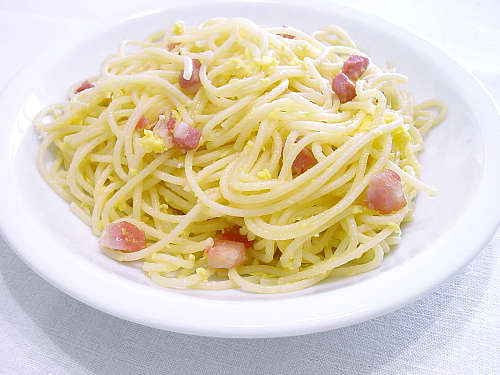
Spaghetti Alla Carbonara...Manga!

Hello again my friends. I would like to share with you one of my favorite Italian dishes to make. I've read that this pasta recipe comes from the Lazio region, which is where Rome is. I had this dish in a hotel in the town of Orte, Lazio. They used a touch less egg, perhaps 2 instead of 3...at least, I think so...it is kind of hazy-slash-dreamy to recall because the hotel owner's daughter, who served us, was a real Italian beauty with dark hair, large, dark eyes, light skin and a no nonsense way about her. Mamma Mia! After serving us and others, she and her equally-as-beautiful mother sat off to the side and watched in amusement as a group of Italian men cheered a soccer game on the television, several of them inebriated out of their minds, but happy as Liguria clams. Classic. Anyway, uh, back to the ingredients...ummm, where were we? Eggs...oh, yes, you might experiment. Two eggs work, but three makes it totally deggadent, har har.


Spaghetti Alla Carbonara

2 tablespoons butter
1/2 cup diced bacon (I use Pancetta instead of American bacon)
1 garlic clove, peeled
14 oz spaghetti
salt and fresh ground pepper
3 eggs, beaten
6 tablespoons grated Parmesan cheese
6 tablespoons grated Pecorino cheese (use all Parmesan if you can't find Pecorino)

Melt butter in large, heavy pan, add bacon and garlic, fry gently until browned, then remove garlic from the pan.

Cook spaghetti in salted water until al dente, drain, add to bacon. Stir well and remove from heat. Add eggs, a pinch of pepper, half the Parmesan and half the Pecorino. Toss until eggs turn creamy, then add remaining cheeses. You might put over heat again, but be careful that the egg doesn't start to cook too much. Add a touch more salt and pepper if desired. Toss again and serve. (Serves 4.)

Enjoy this rich, GUILT-LADEN dish!

Wednesday, September 07, 2005

Is God Italian?

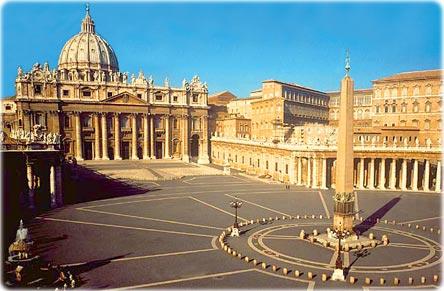
In light of recent religious events which focused world attention upon Italy, that is, the passing of John Paul II and the election of the replacement Pope, Benedict XVI, in a sealed room in the Vatican, some interesting questions come to mind: Is God Italian? Does He like Italians more than Americans or other mongrel peoples? And if virtually the entire world is locked on St. Peter's Square for a week in April, does that mean that Italians have a lock on God, or at the least, "un punto speciale nel suo cuore", a special place in His heart? The answers to these questions are, in my opinion, based upon a bit of current fact, a bit of history, a bit of Biblical knowledge, a bit of Roman Catholic doctrine and a bit of old-fashioned Italian pride. (Yes, I do not mean to shock you, but Italians "got it" and they know it, so much so that they don't need or even care to show "it" off...unlike Americans, who try and fail so very miserably, that they end up looking like the ostentatious-yet-ineffectual narcissistic twits that they actually are.)

So, let's take a brainy ride my friends. Yes, I know, this is America and we don't like to use our brains, but really, this should be painless. Nevertheless, please stay seated at all times...oh, and keep your hand on your wallet.

First, a bit of Catholic doctrine, to establish just who the Pope is. I've learned that Catholics believe that the Pope is the "Vicar" of Christ, meaning that he is the physical representation of God on this earth. And if you watch most Catholics' reaction to the Pope, you might even gather that they may view him as divine as well. So where does the Vicar live? Why, in Italy of course. Ah, but purists (or wop-haters) would protest that Vatican City is in fact not a part of Italy at all, but a small "country" within the country of Italy. While this is technically true, I think it's splitting hairs. To get to the Vatican you go to the country of Italy. I mean, what IS a "country" anyway? I don't know, but I'm fairly sure you have to have an "international" airport to qualify as one, complete with a Food Court. And the last time I was at the Vatican, I didn't see no Chick-Fil-A eatery tended by a gaunt, yellow-eyed man of dubious origin, nor did I see any Boeing widebody--or worse, Airbus--planes taxiing down St. Peter's Square.

Now, while JP2 (John Paul II) was Polish, and Benedict XVI is German, wouldn't it appear that, since they live(d) in the Vatican, God has apparently chosen Italy as a place of residence for the number one man down here? The fact that Vatican City is in the heart of Italy, well, it makes the inference inescapable.

So, how exactly did the Vatican arrive in Italy? The answer lies in the person of Saint Peter the apostle, and this is where things begin to get a bit murky and/or controversial. Catholics consider St. Peter to be the "first Pope", though non-Catholics contest the whole concept of a Pope or that such was Peter. Furthermore, some Catholics believe that Peter was even martyred in Rome, again, something hotly debated in religious circles. You can see where this is going: Therefore, for Catholics, since Peter was the first Pope, and died in Italy, the Catholic faith naturally must make its home there.

But why the emphasis on Peter the apostle as the first Pope? Why is his tomb located behind six inches of glass underneath the Basilica, and not any of the other apostles' tombs? And why is he considered by Catholics to be the first Pope in the first place? The answer, according to the Catholic faith, is the passage in the Bible--you may have heard about it...it's a book--where Jesus states to Peter, "You are Peter, and on this rock I will build my church." (This is found in Matthew 16, in the New Testament.) Catholics believe that the "rock" is Peter, while others insist that the rock is Jesus himself and that He was talking about himself. Aha, so this then is the origin of the Pope and the Roman Catholic faith: that Jesus (according to Catholic interpretation) declared Peter to be the rock upon which the Christian church would be based, that Jesus therefore made Peter the first Pope, and that Peter completed his life's work in Italy.

Seems natural then that Italy and Italians may wish to lay hold of a special claim regarding their place with God. There are a few "snags" however...there's always snags, you know. Both Jesus and Peter were both Jewish, not Italian. They ate kosher meals; Italians most decidedly do not. Furthermore, as Catholic Christians and Protestant Christians ascribe to the belief that Jesus is fully God, then the conclusion is of course that the Catholic God is Jewish, not Italian.

This begs another intriguing question: Since Catholics worship Jewish figures who--most scholars would agree--spent the vast majority of their time in Israel, why then didn't their religion just naturally spring up there, making its home there, as Judaism and Islam did and does? Well, maybe it's because the early Catholics realized there was already enough trouble in Israel between the Hebrews and the Arabs, as there still is in the 21st century; where's that Rodney King (Jew?) when you need him, to get on T.V. and tell these people to get along? I mean, to this day the Jews and the Arabs are still doing the big dukeroo, with no end in sight, despite the efforts of JP2, Bill Clinton and Rachel Corrie, the patron saint of all leftist activists (that poor girl). Or maybe the early Catholics just decided that to try to construct the Vatican in Jerusalem amidst all those wild-eyed, dynamite-adorned jihadists would be less than "optimal". Or maybe they just figured out that Italy is a lot prettier than much of Israel, so why not just make Saint Peter an honorary Italian and then make beautiful Italy the centre of their religion?

On that last point, I would have to concede that Italy is, in general, much prettier than Israel, at least today anyway. However, let me preempt the inevitable (and hollow) accusations of "anti-Semitism" by saying that I dig Jews. They're survivors. I like survivors. Furthermore, I also like Hebrew National hot dogs. They're scrumptious, or, dare I say it, "jew-licious". (Oh yes, I do dare.) But anyway, I assure you that no frothing, goose-stepping, classic Jew-hater would ever eat those things, much less put this illustrative picture here.

So I guess that settles it...at least, in my mind. God is not Italian, but is first and foremost a Spirit, as cited in the Bible, and only then perhaps Jewish. Jesus is not Italian, but Jewish. Peter is not Italian but Jewish. And from the familiar John 3:16 scripture which you learned in Sunday School ("For God so loved the world...") we should agree in principle that God has no favorites and loves all people equally...Heebs, Degos, Krauts, Frogs, Coloreds, Crackers, Heinz-57s, everyone; otherwise, this blog entry could go on and on, eventually wrapping around the "internets" several times like a tapeworm, and who really wants that? For any Catholic readers out there, I love you all and have nothing against you, of course. In fact, I'm Christian myself, though not Catholic. Rather, I'm simply doing some "critical thinking" here on some religious points which concern Italy and her place with God.

All right then...see you next time. Meanwhile, go out there and get some Hebrew National dogs with a side of Rotelli pasta salad.

Grazie and L'Chaim!

Monday, June 27, 2005

Hannibal In Firenze: The Palazzo Vecchio


Palazzo Vecchio a notte
Originally uploaded by aabitia.
The next entry about the film "Hannibal" in Florence features another prime attraction in the heart of the city, the Palazzo Vecchio, or "Old Palace". As you may recall from the film, it is here where Dr. Lecter illustrated his displeasure with the Italian Inspector Pazzi by dangling him off the edge of the balcony of the main building, also known as the Palazzo della Signoria. In the photo, you can just make out said balcony, above the main centre door. Now, if you've ever been to the Palazzo Vecchio, you'd know how eye-rollingly-ludicrous that scene in the movie was, simply because of the absence of people. At any time of the day, virtually around the clock, the square is teeming with humanity--not exactly conducive to pulling off the perfect clandestine crime. I suppose you could say that this was enough ruin the "realism" of the plot. True, but what really bugged me in that scene was that it appeared that between "Silence of the Lambs" and "Hannibal", Dr. Lecter seemed to have morphed from a bloodcurdling psychopath to some wildly off-kilter Garrison Keiller clone, using phrases like, "okey doke", just before he took care of Signore Pazzi. Give me a break.

Anyway, a bit of history: The Palazzo della Signoria was built between the 13th and 16th centuries. This main building was originally constructed as a palace for royalty, eventually becoming home to the Medici family. Soon after the Medicis took residence, part of the building and surrounding structures became what is today the world-famous Uffizi museum, the corner of which you can just see at the far right. After the passing of the Medicis and subsequent dego occupants, the building became the seat of the Italian government when Florence was the capital city of Italy. Today, it functions as the halls for the City Council; however, you can still tour much of it and see the actual locations of many of the scenes from the film, not to mention stunning architecture, paintings, frescoes and sculptures from such artists as Michelangelo and Donatello. Finally, also visible in the photo are two sculptures just in front of the Signoria building: "Fontana di Nettuno" (the Fountain of Neptune), and a copy of Michelangelo's "David", which replaced the original in the last century.

Before we conclude with this entry about "Hannibal" in Florence, I would just like to get on my "high horse" for a few moments. (I am exceedingly good at this.) I did have a personal conflict with this film because of the excessive violent content (combined with seemingly no moral message). Therefore, I will not watch it again. The reason I watched "Hannibal" was because of the setting of the film, and that is really all. However, I am not at all a fan of the "horror" film genre. The plots are thinner than the clear coats on 1980s Camaros, and on top of that, you've got to wonder about anyone who views the torture and dismemberment of human beings as a valid form of entertainment, particularly since these types of terrible incidents seem to be on the rise in American society, the perpetrators often acting out scenes from these idiotic films almost verbatim. Therefore, I would like to propose that real, live fans of "horror" films be taken out to a grassy field on a fully moonlit night and taunted with being maimed in some way via a lethal instrument, such as a red hot George Foreman grill, just so they can see how funny it is. (Yeah, real shocker: it isn't.)

All of this said, ultimately, the film "Hannibal" was indeed disturbing, but fortunately was overshadowed by the sheer stupidity of the script, which rendered it nearly laughable, untenable, and ultimately a bit boring, the impeccable Italian style of Dr. Lecter notwithstanding. So please, accept this as my explanation for these entries, and/or my sincere apology for giving such a violent film any further publicity. There, now you don't have to send me a nastygram; see how it all worked out in the end?

My love to you all. Okey doke, now let's move on to nicer things.

Saturday, May 28, 2005

Hannibal In Firenze: The Pontevecchio

Regardless of what you may think of Hannibal Lecter, there is no denying that the man (?) has an impeccible sense of style, as evidenced in this photo and his decision to move to the beautiful city of Firenze, Italy, after his stay at an asylum in the States (with a brief stop in Jamaica). Personally, I am not a fan of the "horror" film genre, however, in the film "Hannibal" you can see some stunning cinematography in Firenze--or to the layperson, "Florence". In this first entry about Hannibal in Florence, you can see him strolling beneath the Ponte Vecchio--in Italian, "old bridge"--a bridge which spans the Arno river. It is a prime attraction in Florence, built in 1345, and one of the few bridges to survive the bombing raids of World War II. Originally, the shops atop it were food shops, but in the 15th century, they became home to dozens of jewelry shops. Then, in the 21st century, the bridge itself became home to mass numbers of loud, rude American tourists with cellphones the size of Juicy Fruit gum packs, making them look like psychos themselves, talking to their hands. Sigh, if only Hannibal would turn his "attention" to them, phfffft phfffft phfffft phfffft phfffft. Anyway, just walking along the Ponte Vecchio is a feast of the eyes, I mean, uh, for the eyes. It's like walking in a corridor of gold. I would personally recommend "The Golden River", a very fine shop with a pleasant proprietor, a graceful (and pretty) young woman transplanted from Wales, to help you with your jewelry needs. (But honestly, you'd be hard pressed to note any distinguishing features between any of the shops.) If you make a purchase, be sure to ask her about the various export regulations, unless of course you're Hannibal Lecter, in which case export regulations (much less various petty legal documents such as passports and visas) mean nothing, and you can slip in and out of any country you wish, even though you're on the FBI's 10 Most Wanted List. That is what you call skill, my friends, and such is the magic of Hannibal Lecter.

Monday, March 21, 2005

Isobel Campbell on Radio Città del Capo


IsobelCampbell
Originally uploaded by aabitia.
Isobel Campbell is a singer from Scotland who has recaptured the essence of 60s chamberpop, folk and jazz, with her nursery-rhyme-like songs and her wistful, whisper of a voice. I am in like with this woman. I mean look at her holding that terrier...how could a man go wrong with a mousy-voiced, could-be Sesame Street cast member holding a terrier? Impossible. That creepy musing aside, if you enjoy music like Astrud Gilberto, Bacharach, and Belle & Sebastian, you might give her a listen. Her music is simple and beautiful, and in my opinion, absolutely buries most of the stuff getting airplay today, which is long on perfectly manufactured "edginess", noise and effects, but short on melody, meaning and cool sweetness.

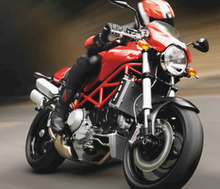
If you'd like to hear some samples of her music and her thoughts on her music, you can listen to an interview of her on Radio Citta del Capo, which is a radio station in Bologna, Italy, in the Tuscan region, a region quite well known as the birthplace of all manner of exotic machines, from Ferraris to Ducatis. (Maybe it's her red jacket that got me to thinking of that.)

You may not realize that, despite my slight rhapsodic stumbling above about terriers and Sesame Street, I am showing considerable demureness in my description of Ms. Campbell, which is of course because I am a gentleman. Contrast this with the average ESPNed male, who would term her "friggin' hot dude" in between swigs of Busch. But after listening to this interview, hopefully you will understand why I have completely pledged my eternal devotion to her, though I have not yet actually contacted her to articulate said pledge with 12 page discourses in longhand, or perhaps with randomly clipped individual letters and phrases from fashion magazines, nicely arranged and pasted to form various messages on white college-ruled paper. Those tokens of affection might be considered by some dark-minded people to be a bit "tacky", and they may claim that such will not achieve the desired effect on the lady in question. Pish-posh, I say; they know nothing of romance.

Anyway, the half-hour interview is mostly in Italian, for all you Italian speakers out there, but you can still hear quite a lot of her answers in English, and also various tracks from her latest album, "Amorino", which, loosely translated means "angelic child". To listen to this interview, click here, then click on the link, "Ascolta!".